
 |
|
𝗨𝗻𝗱𝗲𝗿𝘀𝘁𝗮𝗻𝗱𝗶𝗻𝗴 𝗧𝘄𝗼 𝗖𝗼𝗺𝗺𝗼𝗻 𝗘𝗾𝘂𝗶𝗻𝗲 𝗛𝗼𝗿𝗺𝗼𝗻𝗮𝗹 𝗗𝗶𝘀𝗼𝗿𝗱𝗲𝗿𝘀-Equine cushings disease and and Equine metabolic syndrome These two disorders affect an increasingly large number of horses as they age past 18 years old with Equine cushings disease predisposing horses to the development of insulin dysregulation. They are the two of the most common hormonal disorders in equids.  Equine cushings disease is a neuro endocrine disorder more completely known as Pituitary Pars Intermedia Dysfunction (PPID). It is a disease whereby the hypothamus portion of the brain loses its dopaminergic control of the middle pituitary leading to excessive precursors to cortisol production along with the hormones that affect haircoat leading to the classic long wavy hair coat and the loss of lean muscle mass typically seen.
Equine Metabolic Syndrome (EMS) is more completely termed equine peripheral insulin dysregulation. Younger easy keeper horses can also develop insulin dysregulation due to genetic and breed predispositions, over feeding starchy foods relative to the level of exercise. Equine cushings disease predisposes horses to eventual insulin regulation problems which precipitates a significant number of laminitis cases seen in the older horses population. While both disorders can increase the risk of laminitis alone, those affected with both having a significantly elevated risk of acute laminitis, a painful and potentially life-threatening hoof disease.
ECD affects roughly 10% of horses by the time they are 18 years of age with almost all horses being affected by the age of 30. It is diagnosed with blood ACTH levels following a TRH stimulation test. Common clinical signs of cushings disease include:
🔸Long, curly, or delayed-shedding coat
🔸Muscle loss (especially topline)
🔸Increased thirst and urination
🔸Abnormal or excessive sweating
🔸Pot-bellied appearance, lost topline
🔸Recurrent infections, delayed wound healing
🔸Laminitis (often severe in advanced cases)
Equine cushings disease is a neuro endocrine disorder more completely known as Pituitary Pars Intermedia Dysfunction (PPID). It is a disease whereby the hypothamus portion of the brain loses its dopaminergic control of the middle pituitary leading to excessive precursors to cortisol production along with the hormones that affect haircoat leading to the classic long wavy hair coat and the loss of lean muscle mass typically seen.
Equine Metabolic Syndrome (EMS) is more completely termed equine peripheral insulin dysregulation. Younger easy keeper horses can also develop insulin dysregulation due to genetic and breed predispositions, over feeding starchy foods relative to the level of exercise. Equine cushings disease predisposes horses to eventual insulin regulation problems which precipitates a significant number of laminitis cases seen in the older horses population. While both disorders can increase the risk of laminitis alone, those affected with both having a significantly elevated risk of acute laminitis, a painful and potentially life-threatening hoof disease.
ECD affects roughly 10% of horses by the time they are 18 years of age with almost all horses being affected by the age of 30. It is diagnosed with blood ACTH levels following a TRH stimulation test. Common clinical signs of cushings disease include:
🔸Long, curly, or delayed-shedding coat
🔸Muscle loss (especially topline)
🔸Increased thirst and urination
🔸Abnormal or excessive sweating
🔸Pot-bellied appearance, lost topline
🔸Recurrent infections, delayed wound healing
🔸Laminitis (often severe in advanced cases)
 EMS affects younger to middle-aged horses (6–20 years), especially donkeys, drafts and ponies who are “easy keepers”. Resting blood insulin glucose levels or the use of a glucose challenge test are often used to diagnose this disease. Common clinical signs of Metabolic syndrome include:
🔹 Regional or generalized obesity
🔹 'Cresty' neck, fat pads over tail head or shoulders.
🔹 Recurrent or unexplained laminitis due to structural and metabolic changes brought on by abnormal insulin levels.
🔹Normal coat and bright demeanor (unless laminitic)
Treatment is specific for each disease. Pergolide is used with equine cushings disease to help normalize pituitary control. Annual testing is necessary to ensure adequate dosing of pergolide as dose changes are often necessary as horses age. Metabolic syndrome with or without ECD requires dietary management and management of laminitis if present. It can also involve the use of Steglatro, a sodium-glucose co-transporter 2 (SGLT2) medication used in people to help control type 2 diabetes. It can often also involve small amount of daily Thyroid hormone in conjunction with dietary management and exercise.
Have an older horse, donkey or mule that is an easy keeper you wish to discuss?
EMS affects younger to middle-aged horses (6–20 years), especially donkeys, drafts and ponies who are “easy keepers”. Resting blood insulin glucose levels or the use of a glucose challenge test are often used to diagnose this disease. Common clinical signs of Metabolic syndrome include:
🔹 Regional or generalized obesity
🔹 'Cresty' neck, fat pads over tail head or shoulders.
🔹 Recurrent or unexplained laminitis due to structural and metabolic changes brought on by abnormal insulin levels.
🔹Normal coat and bright demeanor (unless laminitic)
Treatment is specific for each disease. Pergolide is used with equine cushings disease to help normalize pituitary control. Annual testing is necessary to ensure adequate dosing of pergolide as dose changes are often necessary as horses age. Metabolic syndrome with or without ECD requires dietary management and management of laminitis if present. It can also involve the use of Steglatro, a sodium-glucose co-transporter 2 (SGLT2) medication used in people to help control type 2 diabetes. It can often also involve small amount of daily Thyroid hormone in conjunction with dietary management and exercise.
Have an older horse, donkey or mule that is an easy keeper you wish to discuss? Equine Gastric Ulcer Syndrome Gastric ulcer disease is a common condition in foals and horses. EGUS as it is termed comprises Equine Glandular Gastric Disease (EGGD) Equine Squamous Gastric Disease (ESGD)-referencing the two respective regions of the stomach involved. As with people, gastric ulcers are essentially sores or erosions of varying depth that occur in the squamous or glandular portions of the stomach. Prevalence estimates have been reported to range from 25-50% in foals and 60 to 90% of adult horses, depending on age performance, and evaluated populations. They ahve even been found in wild horses roaming the BLM. Although ulcers are similar in foals and horses, they might present with different clinical signs. A diagnosis of this disease relies on the recognition of clinical signs and subsequent endoscopic examination of the stomach. It is important to point out that 50% of horses with ulcers show no outward signs of gastrointestinal disease, but ulceration can interfere with performance by affecting training, appetite, and temperament. Ulcers may heal naturally if horses are turned out to pasture for an extended period of time, but they usually don't heal in horses that continue high level training.
How do ulcers of the squamous and glandular stomach occur? EGSD and EGGD do not have the same causes. Bacterial infection with helicobacter is not seen in horses as with humans and dogs. Ongoing research is pointing toward a link between hind gut biome health and dysregulation of mucosal protection and ulcer development and more research is needed. Squamous disease ulcers are largely a disease of management, nutrition, feeding practices as the glandular portion of the equine stomach secretes acid continuously, lesions that involve the upper squamous portion of the equine stomach result primarily from excessive acid exposure. Glandular ulcers (the gastric glandular portion) result primarily from defective mucosal protection as seen with stress, behavior and chronic NSAID and corticosteroid use such as Phenylbutazone, Banamine and triamcimalone. As with human gastric ulcers, stomach acid appears to be the main cause of equine ulcers. Excessive time below critical pH levels without adequate mucosal protection lead to squamous and/or glandular ulcers. Bottom line- the high prevalence of ulcers seen in performance horses results from many factors including the way the horses are fed and managed. Intensity of training also may contribute to ulcer formation . Image of severe ESGD Diagnosis is based on the presence of clinical signs and confirmation with endoscopic examination (gastroscopy). Clinical signs in foals include intermittent colic, laying on it's back, diarrhea, poor appetite, teeth grinding, and excessive salivation. In adult horses clinical sings include poor appetite, failure to consume a meal, dullness, attitude changes, decreased performance, reluctance to train, poor body condition, rough hair coat, weight loss, excessive laying down, and low grade colic. A definitive diagnosis is necessary as the treatment regimen is directed by the location and severity of ulcers present. Treatment of gastric ulcers is different between EGSD and EGGD, hence underscoring the importance of an accurate diagnosis. Treatment is centered around inhibiting gastric acid and improving the mucosal protective barriers of the stomach. Treatment typically also involves lifestyle, training and nutritional changes with the treatment medications. Currently Gastrogard and Ulcergard. are the only FDA approved treatments for gastric ulcers though many treatments modalities have been described in the literature. Synthetic prostaglandins and mucosal protectants are often also used in glandular cases. Treatment failures are possible especially with advanced squamous and glandular ulcer cases even with proper medication, and management changes may need to be more intensive with followup gastroscopy to ensure the best case outcomes. Want to learn more or believe your horse if experiencing problems with isues that may relate to stomach health? Be sure to follow us on our Facebook and Instagram pages or feel free to call to discuss your horse's health today. https://alpineequine.net/galle... Alpine Equine Hospital 970-379-7100 |
 |

What is Degenerative Suspensory ligament disease in horses
DSLD as it is known, is a condition that affects horses causing a degeneration and inflammation of the suspensory ligaments in the rear (most often) and sometimes forelimbs. The suspensory ligament is responsible for providing mechanical support to the fetlock joint, limiting its movement toward the ground (extension). DSLD often leads to a progressive shifting leg lameness as the disease progresses. As the disease progresses the fetlock drops (sinks) and hyperextends the hock, thus making the horse more upright in the hock. Some lines of horses are genetically predisposed and can see a faster progression of the disease. Some lines of gaited horses are particulary affected though quarterhorses, thoroughbreds, warm blood, morgans and arabians can be affected.
Common clinical signs of DSLD are:
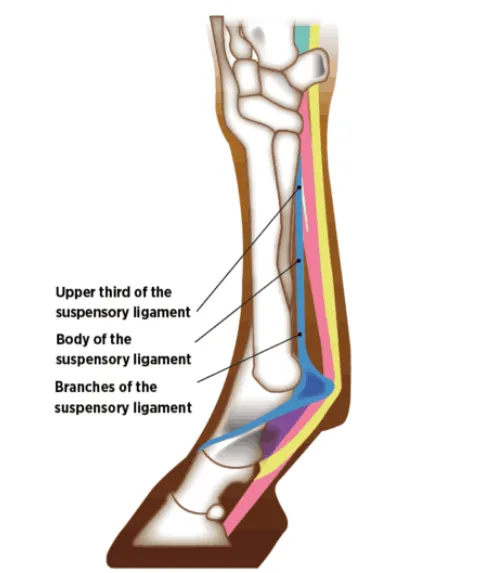
- Lameness stiffness especially after exercise
- A shifting weight stance to the hindlimbs at rest
- Changes consistent with ligament disease on digital ultrasound ( a prognostic indicator)
- Changes in the horses gait
- Swelling, heat and pain on palpation to the affected areas of the suspensory ligament
- Changes in hoof growth and wear patterns
- Lameness is usually progressive over a period of months to years
- In later stages the horse may be unwilling to fully load the limb
While there is no cure for DSLD management strategies include providing comfortable non stressful environment for the patient
- Adjusting activity and exercise levels ( a more sedentary level of sexercise may be necessary)
- Providing supportive wraps and measures to best support the fetlock with farriery
- Managing pain with oral non steroidal anti-inflammatory medicines
- Focused shock wave therapy
- Intralesional therapies such as platelet rich plasma or corticosteroids
- Quality of life is often discussed as the disease progresses