

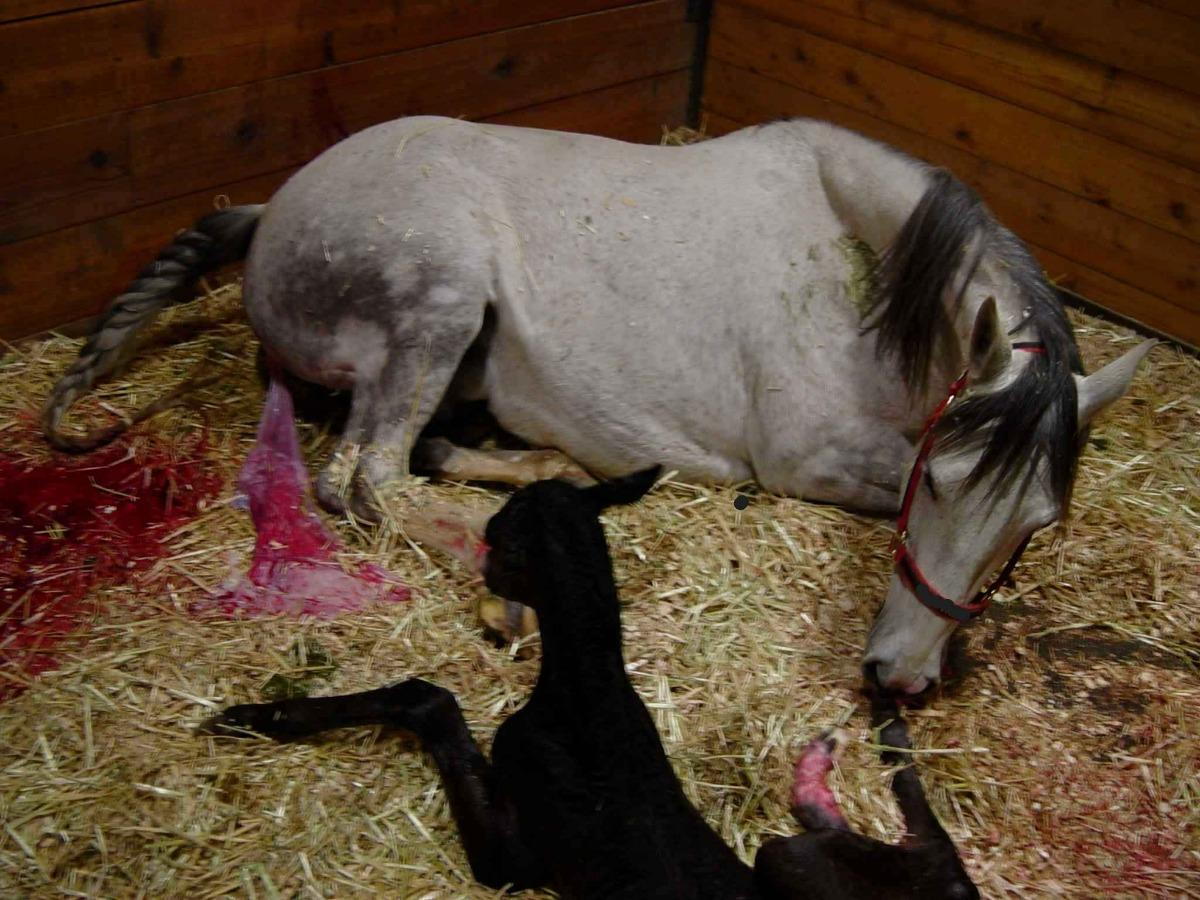
As our recent first two installemnts of our foal season blog have pointed out, the initial veterinary exam is extremely important to help ensure the health of your new foal. Here are the top 13 most common abnormalities that we encounter
- Fractured Ribs- Fractured ribs are a very serious problem in the neonate, because death can result from a fractured rib penetrating the heart or lungs.
- Heart Murmurs- Most murmurs are physiologic and resolve in the first few days of life. However, if a murmur persists beyond 2 wk of age, a cardiac ultrasound examination should be performed even in clinically normal foals. Most pathologic murmurs will not dissipate with light sedation.
- Umbilical Bleeding-Occasionally, an umbilical vein will hemorrhage if it has failed to close properly after rupture or if a foal is straining to defecate with meconium impactions.
- Umbilical Hernia- Umbilical hernias are easily palpated on the new- born examination; Many do not require immediate attention but are closed surgically at a later date.
- Meconium Impaction- Meconium is the brown, black, or greenish brown feces that is composed of glandular secretions and digested amnion. Most is passed within 24 h after birth, and it is followed by typical yellowish-colored milk feces. Meconium retention is a common source of abdominal pain in the neonate but is more common in colts. Affected foals are as such often given fleet enemas to reduce the incidence of this condition.
- Delayed Ossification of Cuboidal Bones- Many premature foals are affected with this problem. The hardening or ossification of the small bones of the carpus and hock occurs in the final 30 days of pregnancy. Inadequately ossified bones lead to a crushing of the carpal or tarsal bones. This can be complicated further by angular limb deformities and inappropriate levels of turnout in the first weeks of life.
- Neonatal Maladjustment Syndrome- This condition is a common abnormality. This syndrome can follow premature placental separation (red bag), dystocias. The clinical signs can vary in onset and clinical presentation with the most common issue being a failure to stand or nurse effectively. Most signs are apparent within 48 h of birth; A great deal of research has occurred with this condition as it relates to the persistence of progestin hormones in the neonate.
- Septicemia- Foals may be born with a bacterial septicemia secondary to ascending infection originating from the placenta. These situations are more common with multiparous mares with potential previous cervical trauma and/or endometrial infections. Sepsis can become apparent in first few hours of life or over the first several days. Bacterial infections can gain entrance to the foals blood stream via the GI tract in the cases of too much time taken prior to nursing, through the umbilicus, through the respiratory tract and or via a compromised ueteroplaceta prior to birth.
- Failure of Passive Transfer or lack of adequate colostral antibody transfer can occur when a mare leaks colostrum prior to foaling. This situation can be complicated further by the presence of an inciting infection of the placenta termed placentitis. A mare who unexplainably starts leaking colostrum in her 8-10th month of gestation should be evaluated immediately to address the cause and help ensure the possibility of a full term foal.
- Diarrhea- Diarrhea is commonly noted as a coincidental finding with the mare’s first estrus cycle post foaling termed foal heat diarrhea. Supportive care is typically all that is necessary in these cases as it relates to dermatitis if diarrhea persists or is severe. Yet diarrhea associated with remote or primary GI bacterial or viral infections can often be serious and requires accurate diagnosis to guide appropriate therapy. Unattended, it can lead to bacterial septicemia and joint ill, both of which are life threatening conditions often requiring hospitalized care.
- Prematurity- Foals are considered premature if born before 320 days of gestation. Foals with curled ears and or red velvety tongues are often noted as premature. Normal gestational length is 322–345 days. Premature foals are at risk for serious medical and orthopedic issues as a result of incomplete development of their immune, respiratory and gastrointestinal systems as well as inadequate bone development of the carpal and tarsal bones. These cases can often have moderate to severe angular limb deformities requiring significant splinting until such time adequate ossification or bone development occurs. The altitude of the roaring fork valley further complicates the helath of foals born prior to 330 days gestation.
Patent Urachus and Omphlabitis- The urachus is the in-utero connection between the fetus’ urinary bladder and allantoic cavity. In normal foals this conduit closes soon after birth and becomes ligamentous structures within the foals abdomen. In foals that are immunologically stressed or where improper care is provided to the umbilical stalk, ophlabitis can occur and allow entrance of infections to the foal via the umbilcal arteries and vein.
Common orthopedic abnormalities include Windswept foals and those with either angular limb deformities and/or contracted extensor or lax flexor tendons. Proper identification of the cause and management using appropriate splinting or plastic glue on shoes is warranted in many cases with frequent reassessments over the first 2 weeks of life central to success.
Got a foaling question? We are here to help.
Chuck Maker DVM
Justine Stalnaker DVM
Alpine Equine Hospital-PC 17776 Hwy 82-Carbondale-CO 81623
Office appointment desk: 970-379-7100 Office Fax: 970-510-7332
Office emergency cell: 970-366-1320
www.alpineequine.net and https://alpineequine.vetsfirstchoice.com/