

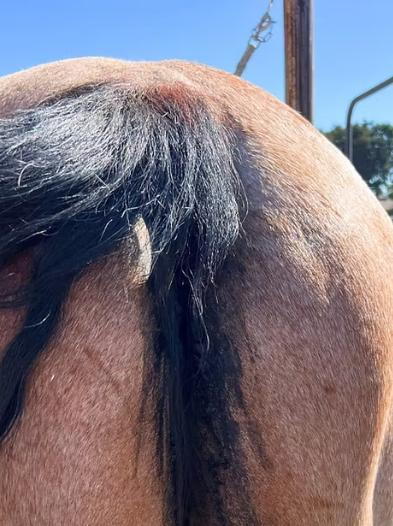
This is a tough time of year to have to constantlyhave to bathe your horse's hind end when they have constant watery stools. More specifically we see a disease termed Fecal Water Syndrome (FWS)in horses. It is generallyconsidered amanagement-related gastrointestinal condition, not a disease by itself although it can look like infectious diseases that cause watery stools. It’s an often-chronic condition typified bynormal, well-formed manure balls, but withexcess watery fluidthat runs out separately, often soaking the tail, hind legs, and stall walls. We see it more often unfortunately in the winter, and as much as this winter isn't winter we have seen a couple cases in the last month. It can come and go especially in older horses. Generally speaking, horses have normal fecal balls with too much water rather than true diarrhea (without fecal balls).
It is amultifactorial, with several factors contributing to the condition. Dietary factors such as high forage diets withpoor-quality hay,Sudden diet changes, excess soluble fiber or indigestible fiber, dusty hay and sometimes protein and/or mineral imbalances.
The hind gut microbiome is often partially incriminated with a Disruption of normal gut bacteria causing a reduced fermentation efficiency often brought with seasonal (cold weather stress). Decreased water intake brought on by cold weather which alters gut motility has also been thought to play a role.
Stressors such as stabling, reduced turnout, changes in routine and herd pecking order may play a role
As GI motility is altered in affected horses poor dental care and inadequate poor chewing allowing inadequately chewed fiber to reach the hind gut are often incriminated.
Managing FWS involves the following: Switch to high-quality, consistent hay,Avoid moldy, overly mature, or stemmy hay. Diet changes should be made gradually over 10-20 days. Soaked beat pulp can sometimes offer relief when added as a good source of fiber. Adding a hind gut pre- and probiotic are common recommendations with low non-structural carbohydrate feeds. Adequate heated water in winter with salt block access to improve water consumption is suggested. Stressors should be avoided. Careful consideration of any long term NSAIDS should be discussed as they may contribute to colonic inflammation. Equioxx, a commonly used arthritis medication in older horses can adversely affect the large colon perhaps contributing to symproms. An annual dental checkup is warranted to ensure adequate dentition for chewing. Finally, skin care to manage and help avoid dermatitis below the tail is typically necessary to avoid unwanted additional skin problems.
Your vet may recommend diagnostics to help determine any underlying causes. The lab work may include Fecal analysis, bloodwork a dental exam and a diet analysis or review.
Bottom line is that FWS is typicallymanageable but not always curable.Many horses improve significantly withconsistent forage quality and gut support.Some cases are seasonal and recur annually
Got a question or a topic on horse health for next week-Give us a call.
There is nothing more to be learned by getting kicked by a mule twice! :)
Chuck Maker DVM
Justine Stalnaker DVM
#alpineequine