

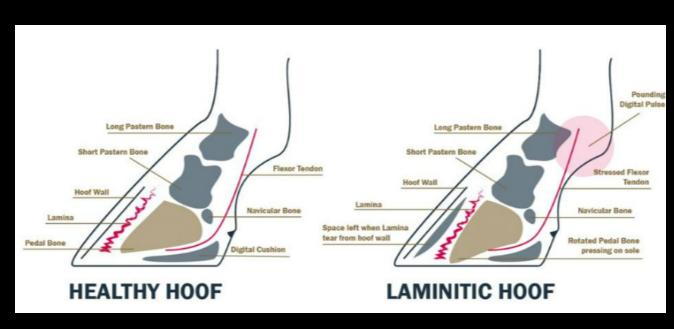
Laminitis is a very painful and often reoccurring issue in horses, donkeys and miniature horses, especially those with cushings disease and metabolic syndrome. Laminitis is defined as inflammation of the laminae of the hoof. This inflammation leads to the weakening of the attachment between the bony column (coffin bone) and the hoof wall. This disease is incredibly painful for horses, involving orthopedic and neuropathic pain, if untreated it can lead to permanent changes to the hoof and chronic severe lameness.
Laminitis can arise from three general situations: endocrine diseases, systemic inflammatory diseases, or mechanical overload. Endocrine and metabolic diseases are the most common cause of laminitis we see in this valley. Horses with acute laminitis typically present with bilateral forelimb lamenessMany appear to walk on egg shells and have difficulty cornering. All will have increased digital pulses. The horse may stand with their weight rocked back to the hind end to take weight off their painful forelimbs. They may also be unwilling to move or pick up their front feet. Horses in the chronic phase of laminitis may show distortion of the hoof wall and a displaced or altered coffin bone on xrays and a distorted hoof capsule. They may show mild to severe lameness, an unwillingness to move, or increased time laying down.
A diagnosis is typically made on clinical signs, bloodwork for undiagnosed endocrine disease, and high quality radiographs. A variety of treatments are used depending on the cause, timeline of the condition and severity of disease. Treatment for laminitis is generally threefold; controlling pain and inflammation, changing the mechanics of the foot to prevent rotation and promote/normalize foot blood supply, and control the inciting cause of the laminitis. Pain control is managed using NSAIDs such as Bute, Tylenol, icing the feet, and limiting them to a heavily bedded stall. Mechanical changes to the foot are made with ferriery to raise up the heel and redistribute the horse's across the heel and its sole using special shoeing and soft impression material. These biomechanic changes help decrease pain and reduce rotation forces to the coffin bone reducing strain of the deep digital flexor tendon. Bloodwork is commonly used to evaluate if an endocrine disorder is playing a role to allow appropriate medication and dietary management. After initial stabilization, it’s important to work closely with your farrier to gradually return your horse back to their normal shoeing cycle and physical routine based on sequential radiographs.
The prognosis for laminitis varies widely depending on the cause, the length it’s been going on before intervention, and response to treatment. If diagnosed and treated early, stabilization can be very successful, and the horse can eventually return to work. Understanding and controlling the cause of the disease can help prevent further laminitis episodes.
Laminitis is a very scary disease, but by working with your veterinarian and farrier team a succesful outcome is possible. Understanding the clinical signs and seeking out emergency care can help your horse recover quickly.